
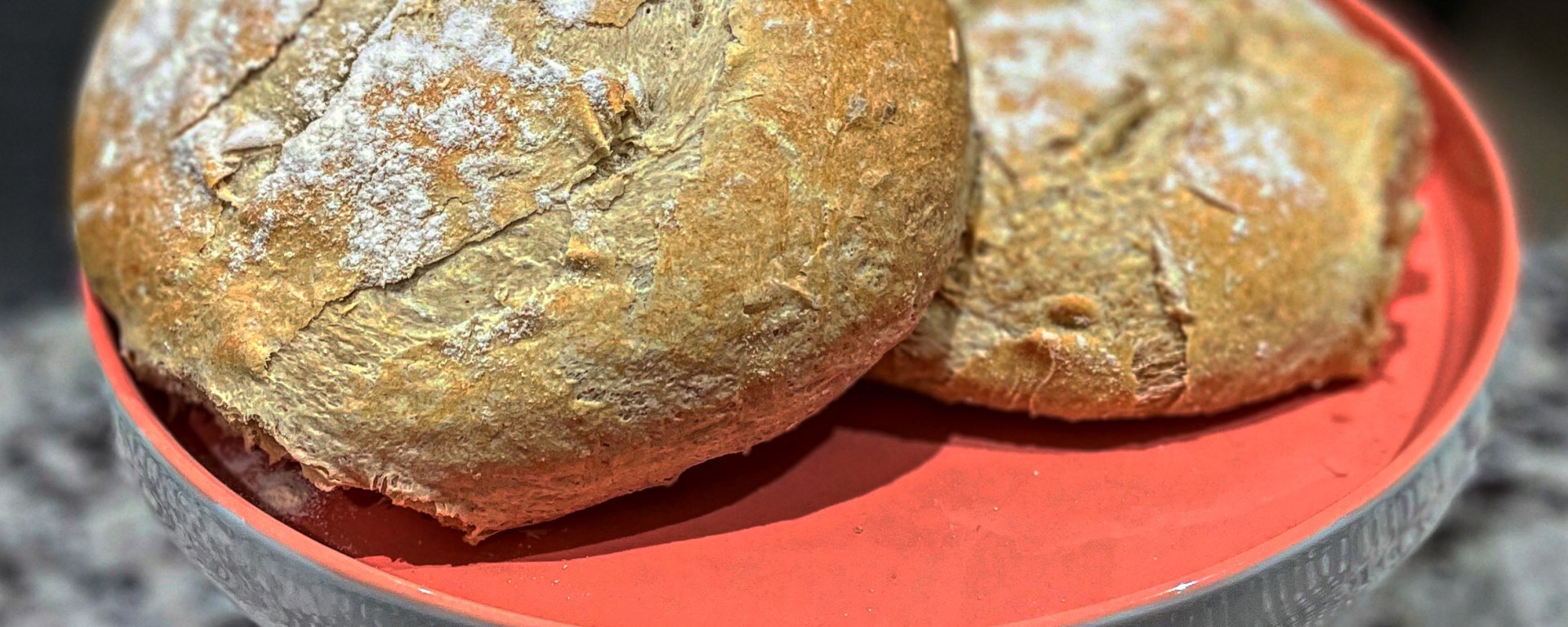
Who does not love the aroma of freshly baked bread, that feeling of craving and emotion that surrounds us when perceiving the pleasant smell of the result of cooking the mixture of water, flour and yeast. That same food that represents for thousands of years, the basis of our diet. And even today it has a very important role in our daily lives.

History:
According to historians, the signs of the oldest bread in the world were around 8000 BC in the Middle East, specifically in Egypt. Did you know that the Egyptians were excellent brewers? It is believed that thanks to his experience in brewing, combined with the climatic conditions of the area, the first sourdough in the world was produced.
Around the world, in the following centuries, various countries developed their own versions of bread. Some of them using yeast others not. Around the year 450 BC the romans invented water milling which led to increased bread production. Interestingly, the wealthier Romans considered whiter bread to be of higher quality and more suitable for the wealthy and educated.
Similarly, in medieval times, baking bread became quite a symbol of status and wealth. The upper classes preferred to consume the finest and whitest breads, while those of poorer status stayed with breads mainly made of rye, bran and other darker ones.
Recipe:
loaf bread
Baking time – 35 min
Temperature – 230°C (446°F)
Wheat flour – 500 gr
Warm water – 275 ml
Yeast – 10 gr
Sugar – 15 gr
Salt – 7 gr
Sourdough – 125 gr
Process:
Form a volcano of wheat flour and salt, add the warm water, yeast, sourdough and sugar to the center and mix.
Begin to integrate the ingredients until a homogeneous dough is obtained, this must be kneaded until an elastic dough is obtained.
Once obtained, let stand at room temperature in a container covered with a cloth for about an hour, or until doubled in size.
Once the time has passed, punch the dough and portion it into 3 equal parts and roll.
Place them in a container with enough flour so that they do not stick and let them rest for another 30 minutes.
When the dough increases its size again, place it on a baking tray and make a few light cuts on the surface as decoration.
Bake with moisture until slightly brown on the surface.
Remove from oven and let cool.
Cut into slices and enjoy.
Additional notes:
If the dough presents rancid aromas, it is very likely that the fermentation was not carried out properly and it can cause a bread with a bad taste. As a reference, when letting the dough rest, it should give off aromas of yeast or beer.
This bread can be accompanied with sweet or savory toppings.
Thank you! 🙂

 Gastronomic Pleasure